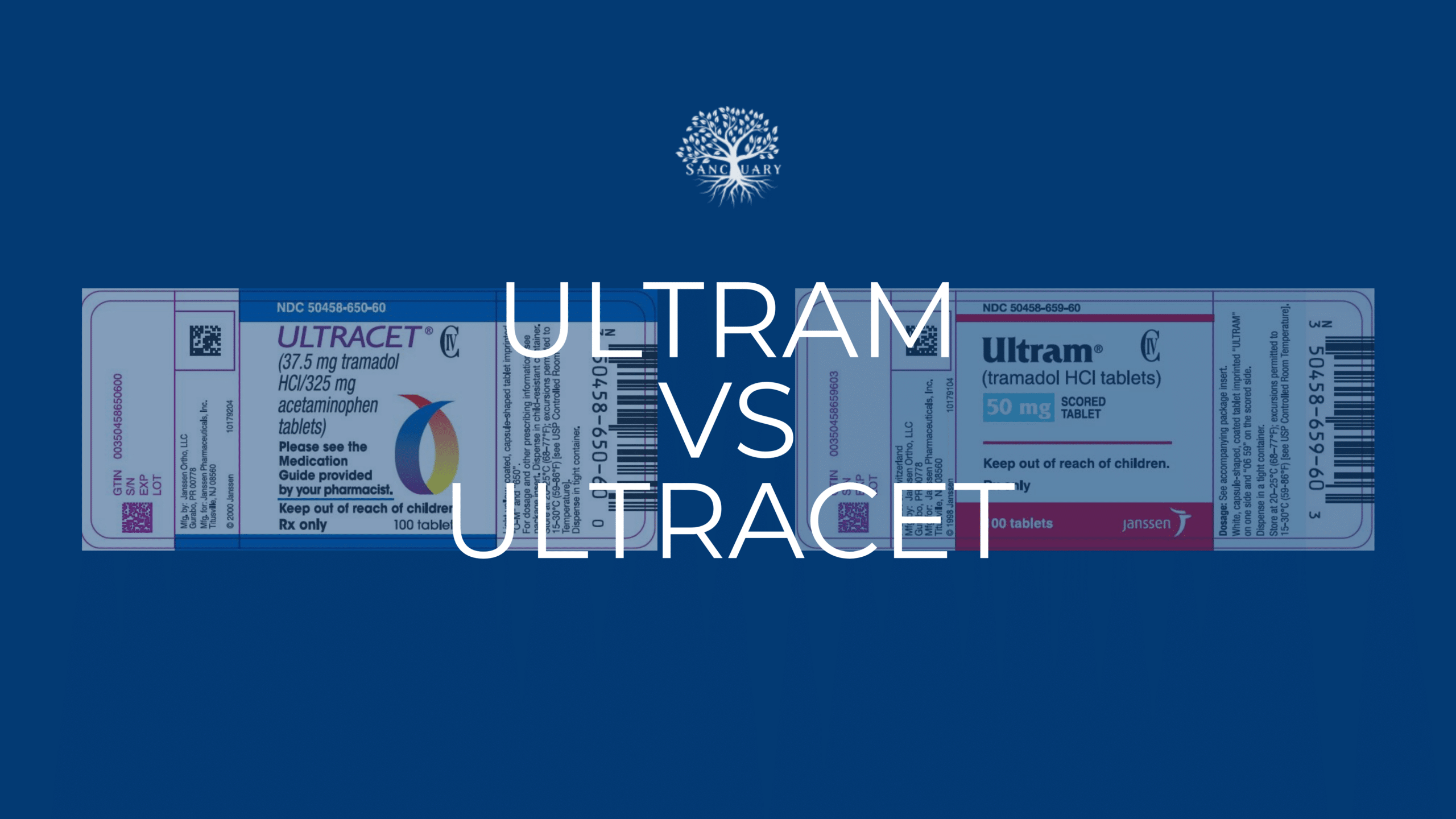
Ultracet vs Ultram: Differences, Effects, and Addiction Risk
Ultracet and Ultram sound almost identical, and both are prescribed for pain. Because they share a similar name and both contain tramadol, many people assume they work the same way. They don’t.
The difference between Ultracet and Ultram matters for pain control, side effects, overdose risk, and long-term safety, especially for people with a history of substance use.
At Sanctuary Treatment Center, we often see individuals who began using tramadol products legitimately and later found themselves struggling with dependence.
Table 1. Ultracet vs Ultram: Comparison at a Glance
| Feature | Ultram | Ultracet |
|---|---|---|
| Active ingredients | Tramadol only | Tramadol + Acetaminophen |
| Drug class | Synthetic opioid (Schedule IV) | Synthetic opioid + non-opioid analgesic |
| Primary use | Moderate pain | Moderate short-term acute pain |
| Pain strength | Moderate | Moderate to moderately strong (synergistic effect) |
| Duration options | Immediate & extended-release | Immediate-release only |
| Liver toxicity risk | Lower (no acetaminophen) | Higher (acetaminophen limit applies) |
| Maximum daily limitation | Based on tramadol dose | Limited by tramadol and acetaminophen ceiling |
| Seizure risk | Present at high doses | Present at high doses |
| Addiction potential | Moderate | Moderate |
| Overdose concerns | Respiratory depression, seizures | Respiratory depression, seizures, liver failure risk |
What Is Ultram?
Ultram is the brand name for tramadol, a synthetic opioid analgesic. Tramadol works in two ways:
• It binds weakly to opioid receptors
• It increases serotonin and norepinephrine levels in the brain
This dual mechanism means tramadol acts partly like an opioid and partly like an antidepressant. Ultram is typically prescribed for moderate pain and is available in immediate-release and extended-release forms.
Table 2. Ultram (Tramadol) Pill Identifier
| Strength | Imprint | Shape | Color | Notes |
|---|---|---|---|---|
| 50 mg (generic) | 377 | Round | White | Common immediate-release tramadol tablet |
| 50 mg (generic) | AN 627 | Round | White | Frequently dispensed generic version |
| 50 mg (generic) | ULTRAM 50 | Capsule-shaped | White | Older branded formulation |
| 100 mg ER | Various (manufacturer specific) | Oval | White | Extended-release formulation |
| 200 mg ER | Various (manufacturer specific) | Oval | White | Extended-release; do not crush |
| 300 mg ER | Various (manufacturer specific) | Oval | White | Extended-release; highest ER dose |
Important: Extended-release (ER) tablets should never be crushed or split due to overdose risk.
What Is Ultracet?
Ultracet is a combination medication containing:
• Tramadol
• Acetaminophen
The acetaminophen component enhances pain relief without increasing opioid receptor activity. This combination is commonly prescribed for short-term acute pain. So the key difference is:
Ultram = tramadol only
Ultracet = tramadol + acetaminophen
Table 3. Ultracet (Tramadol + Acetaminophen) Pill Identifier
Each Ultracet tablet contains 37.5 mg tramadol + 325 mg acetaminophen.
| Strength | Imprint | Shape | Color | Notes |
|---|---|---|---|---|
| 37.5 mg / 325 mg (brand) | ULTRACET | Oblong | Light yellow | Brand-name version |
| 37.5 mg / 325 mg (generic) | 650 | Capsule-shaped | Yellow | Common generic |
| 37.5 mg / 325 mg (generic) | APO T37 | Oval | Yellow | Manufacturer-specific |
| 37.5 mg / 325 mg (generic) | G 252 | Capsule-shaped | Yellow | Widely dispensed generic |
Important: Because Ultracet contains acetaminophen, total daily acetaminophen intake must remain under recommended limits (generally 3,000–4,000 mg/day depending on provider guidance).
How They Work Differently
Both medications deliver tramadol’s opioid and serotonin-based effects. However, Ultracet adds acetaminophen, which:
• Enhances overall pain relief
• Adds a liver toxicity ceiling
• Increases risk if doses are escalated
Ultracet may provide stronger relief for acute pain because of the synergistic effect between tramadol and acetaminophen. But that added component also introduces liver risk.
Duration and Strength
Ultram
• Available in extended-release forms
• Can provide longer pain coverage
• No acetaminophen-related liver limit
Ultracet
• Typically shorter-acting
• Contains 325 mg acetaminophen per tablet
• Daily dose must account for acetaminophen maximums
Because Ultracet contains acetaminophen, taking higher amounts to chase stronger opioid effects increases liver damage risk quickly.
Addiction Potential
Many people believe tramadol is safer or less addictive than other opioids. While tramadol is considered less potent than drugs like oxycodone, it is still a Schedule IV controlled substance in the United States.
Addiction risk increases when:
• Doses are escalated
• Medication is taken more frequently than prescribed
• It’s used for mood enhancement
• It’s combined with alcohol or other sedatives
Tramadol has a unique risk profile because it also affects serotonin. Withdrawal can include both opioid symptoms and antidepressant-like discontinuation effects.
Withdrawal Differences
Ultram withdrawal may include:
• Anxiety
• Restlessness
• Sweating
• Muscle aches
• Nausea
• Insomnia
Because tramadol affects serotonin, withdrawal can also cause:
• Mood swings
• Depression
• Irritability
• Brain zaps (electric shock sensations)
Ultracet withdrawal includes the same tramadol-related symptoms. Acetaminophen does not cause withdrawal, but misuse of Ultracet increases liver stress.
Liver Risk: The Ultracet Factor
Ultram does not contain acetaminophen, Ultracet does. That means Ultracet carries an added risk:
• Exceeding 3,000–4,000 mg acetaminophen daily can cause liver injury
• Alcohol use significantly increases liver toxicity
• Accidental overdose is possible when combined with cold or pain medications
For individuals with alcohol use disorder, Ultracet poses higher medical risk than Ultram due to liver strain.
Seizure Risk
Tramadol lowers the seizure threshold, especially at high doses or when combined with:
• Antidepressants
• Stimulants
• Alcohol
• Other opioids
This risk applies to both Ultram and Ultracet.
When Tramadol Becomes a Problem
Warning signs include:
• Needing higher doses for the same relief
• Using it for mood rather than pain
• Taking it early or running out
• Anxiety between doses
• Using alcohol alongside it
Because tramadol has both opioid and antidepressant effects, dependence can develop gradually and feel different from stronger opioids.
How Sanctuary Treatment Center Helps
If tramadol use has become difficult to manage, professional support is available. Sanctuary provides:
• Medical detox when appropriate
• Dual diagnosis care
• Medication-assisted treatment when indicated
• Therapy focused on pain, trauma, and coping
• Structured relapse prevention
We approach tramadol dependence with the same clinical seriousness as other opioids.
Frequently Asked Questions
Can you take Ultracet and ibuprofen together?
In many cases, yes, Ultracet (tramadol + acetaminophen) and ibuprofen work through different mechanisms and can sometimes be taken together for additional pain relief. However, this should only be done under medical guidance. Combining medications increases the risk of side effects such as stomach irritation, kidney strain, sedation, or drug interactions. Never exceed recommended doses.
Is Ultram a narcotic?
Ultram contains tramadol, which is classified as a Schedule IV controlled substance in the United States. While it is sometimes described as a “weaker opioid,” it still acts on opioid receptors and carries dependence and misuse risk.
Is Ultram an opioid?
Yes. Ultram (tramadol) is a synthetic opioid. It binds to opioid receptors and also affects serotonin and norepinephrine levels in the brain.
Does Ultram have Tylenol in it?
No. Ultram contains tramadol only. Tylenol (acetaminophen) is found in Ultracet, not Ultram.
Is Ultram an NSAID?
No. Ultram is not a nonsteroidal anti-inflammatory drug (NSAID). It is an opioid medication with additional serotonin and norepinephrine effects.
Is tramadol Ultram?
Yes. Ultram is the brand name for tramadol. Generic tramadol contains the same active ingredient
Is Ultracet stronger than Ultram?
Ultracet may feel stronger for pain relief because it combines tramadol with acetaminophen. However, it does not contain more opioid activity than Ultram. The additional acetaminophen enhances overall analgesia.
Can Ultracet cause liver damage?
Yes, if taken in excessive amounts. Ultracet contains acetaminophen, and high doses of acetaminophen can lead to liver toxicity, especially when combined with alcohol.
Sources
- National Library of Medicine. (2024). Tramadol: MedlinePlus drug information. https://medlineplus.gov/druginfo/meds/a695011.html
- U.S. Food and Drug Administration. (2017). ULTRAM (tramadol hydrochloride) tablets, prescribing information. https://www.accessdata.fda.gov/drugsatfda_docs/label/2017/020281s039lbl.pdf
- U.S. Food and Drug Administration. (2018). ULTRACET (tramadol hydrochloride and acetaminophen) tablets, prescribing information. https://www.accessdata.fda.gov/drugsatfda_docs/label/2018/021123s016s017lbl.pdf
- National Library of Medicine. (2021). DailyMed: Tramadol hydrochloride and acetaminophen tablet (drug label information). https://dailymed.nlm.nih.gov/dailymed/drugInfo.cfm?setid=1ad89537-3e59-438c-b646-b3c93b790853
- Mayo Clinic. (2026). Tramadol and acetaminophen (oral route): Description. https://www.mayoclinic.org/drugs-supplements/tramadol-and-acetaminophen-oral-route/description/drg-20062870
- Cleveland Clinic. (n.d.). Tramadol; acetaminophen tablets. https://my.clevelandclinic.org/health/drugs/20810-tramadol-acetaminophen-tablets
- National Library of Medicine. (2024). Safe opioid use: MedlinePlus. https://medlineplus.gov/safeopioiduse.html
- National Library of Medicine. (2024). Opioid overdose: MedlinePlus. https://medlineplus.gov/opioidoverdose.html
- Drug Enforcement Administration, Diversion Control Division. (n.d.). Controlled substance schedules. https://www.deadiversion.usdoj.gov/schedules/schedules.html
- Drug Enforcement Administration. (2014). Schedules of controlled substances: Placement of tramadol into Schedule IV. Federal Register. https://www.federalregister.gov/documents/2014/07/02/2014-15548/schedules-of-controlled-substances-placement-of-tramadol-into-schedule-iv