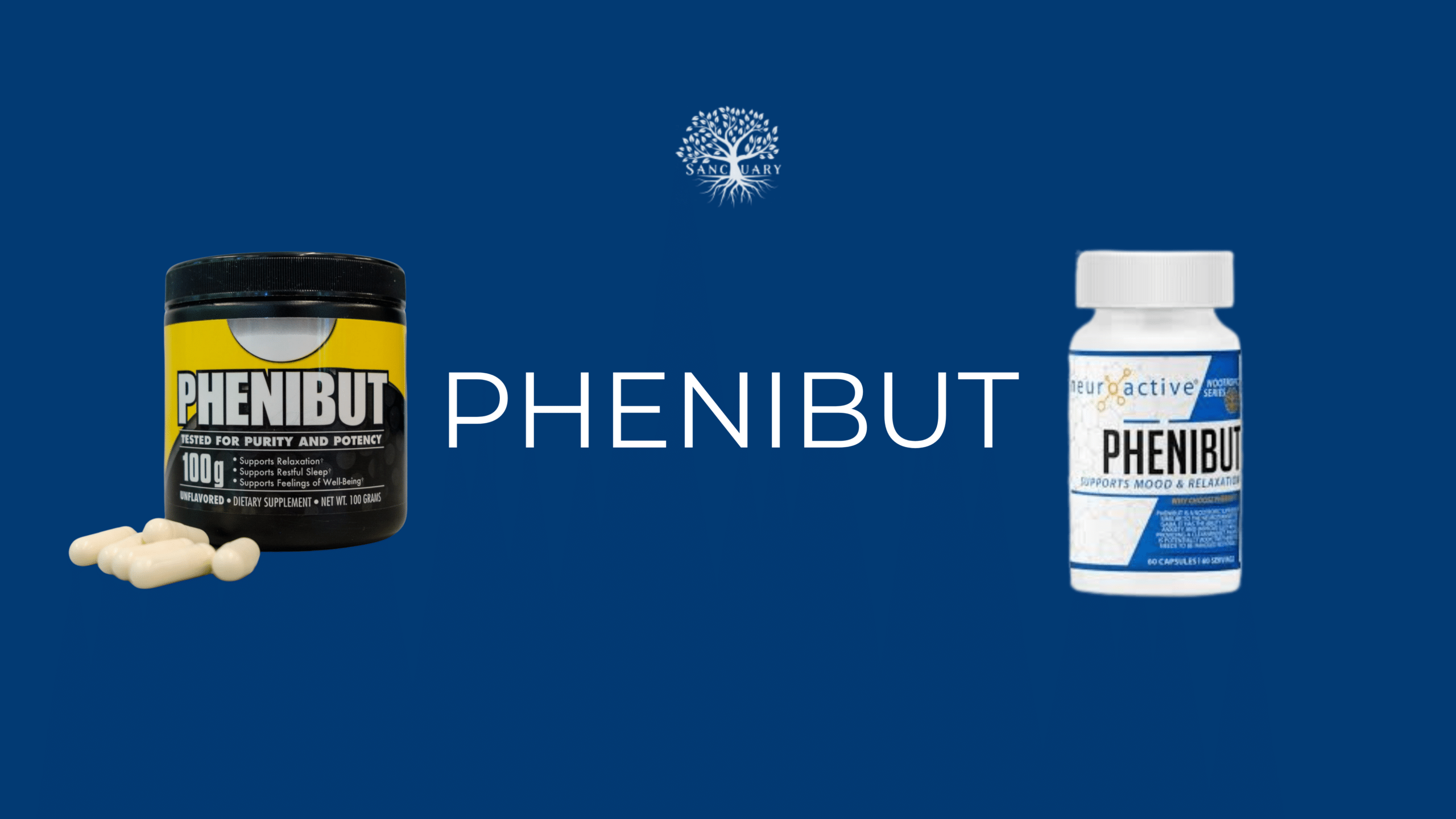
Phenibut Withdrawal: Why This “Supplement” Can Be Dangerous
Phenibut is often sold online as a cognitive enhancer, stress reducer, or sleep aid. Because it’s marketed as a supplement, many people assume it’s mild or low-risk. In reality, phenibut acts on the brain in ways similar to certain prescription medications and can cause significant physical dependence.
At Sanctuary Treatment Center, we’ve seen phenibut use escalate quickly. What starts as occasional anxiety relief can turn into daily dosing, tolerance, and difficult withdrawal.
Understanding phenibut withdrawal is critical before attempting to stop.
What Is Phenibut?
Phenibut (beta-phenyl-gamma-aminobutyric acid) is a synthetic compound developed in the 1960s in Russia. It is structurally similar to GABA, the brain’s primary inhibitory neurotransmitter. Phenibut primarily acts on:
• GABA-B receptors
• Dopamine pathways (mildly)
Because it crosses the blood-brain barrier, it produces calming, anti-anxiety, and sedating effects. Users often report:
• Reduced social anxiety
• Improved sleep
• Muscle relaxation
• Mood elevation
However, these effects come with rapid tolerance.
Table 1. Commonly Sold Phenibut Product Formats
| Product Type | How It’s Labeled | Typical Strength / Format | Where It’s Commonly Sold | Risk Notes |
|---|---|---|---|---|
| Phenibut HCl Powder | “Phenibut HCl” | Bulk powder (100g–500g tubs) | Online nootropic sites | Easy to mismeasure; rapid tolerance; higher overdose risk |
| Phenibut HCl Capsules | “Phenibut 250 mg / 300 mg / 500 mg” | Pre-measured capsules | Online supplement retailers | Misleading “supplement” labeling; daily use can escalate quickly |
| Phenibut FAA (Free Amino Acid) | “Phenibut FAA” | Powder or capsules | Online specialty vendors | More concentrated; slower onset; longer duration |
| “Relaxation Blend” Capsules | Often marketed as stress or mood support | Phenibut combined with L-theanine, caffeine, or herbs | Online and some smoke shops | Polysubstance stimulation + sedation mix increases unpredictability |
| Sleep Aid Formulas | Marketed for deep sleep | Phenibut + melatonin or herbal sedatives | Online supplement stores | Increased sedation risk |
| Pre-Workout / Focus Blends (older formulas) | Marketed for motivation | Phenibut mixed with caffeine | Some specialty fitness retailers | High anxiety rebound; stimulant crash worsens withdrawal |
| Research Chemical Packs | “Not for human consumption” label | Powder form | Online gray-market vendors | No dosing regulation; purity unknown |
Table 2. Most Common Chemical Forms Sold
| Form | Onset | Duration | Notes |
|---|---|---|---|
| Phenibut HCl | Faster onset | Shorter duration | More acidic; common in capsules |
| Phenibut FAA | Slower onset | Longer lasting | Often considered more potent by weight |
Why “Store-Bought” Doesn’t Mean Safe
Phenibut products are often sold as:
• “Nootropics”
• “Anxiety support”
• “Mood enhancers”
• “Sleep aids”
But they:
• Are not FDA-approved medications
• Have no standardized dosing
• May vary in purity
• Can cause rapid tolerance
• Can produce severe withdrawal
Because many are sold online or in supplement-style packaging, users often underestimate potency.
Why Phenibut Can Become Addictive
Phenibut directly stimulates inhibitory pathways in the brain. With repeated use:
• The brain reduces natural GABA sensitivity
• Tolerance builds quickly
• Higher doses are needed
• Anxiety between doses increases
Some individuals begin dosing daily or multiple times per day within weeks. Dependence can develop faster than many people expect.
Phenibut Withdrawal Symptoms
Withdrawal symptoms can resemble benzodiazepine or alcohol withdrawal because they all affect GABA systems. Common symptoms include:
• Severe rebound anxiety
• Insomnia
• Irritability
• Tremors
• Sweating
• Rapid heart rate
• Nausea
Moderate to severe withdrawal may include:
• Panic attacks
• Hallucinations
• Confusion
• Delirium
• Seizures
Symptoms typically begin 12 to 24 hours after the last dose but may vary depending on frequency and dose size.
Why Withdrawal Feels So Intense
When phenibut artificially increases inhibitory signaling, the brain compensates by reducing its own calming activity. When the substance is removed:
• Excitatory signals surge
• Anxiety spikes dramatically
• Sleep becomes extremely difficult
• Physical agitation increases
This rebound effect can be more severe than the anxiety the person originally tried to treat.
Phenibut and Polysubstance Use
Phenibut is sometimes combined with:
• Alcohol
• Benzodiazepines
• Opioids
• Kratom
This significantly increases risk of:
• Respiratory depression
• Blackouts
• Accidental overdose
• Severe withdrawal complications
Mixing central nervous system depressants is especially dangerous because sedation effects stack.
How Long Does Phenibut Withdrawal Last?
Withdrawal duration depends on:
• Daily dose
• Length of use
• Frequency of redosing
• Co-occurring mental health conditions
• Other substance use
Mild symptoms may last several days. Heavier users may experience lingering anxiety, insomnia, or mood instability for weeks. Abrupt cessation after high-dose use increases seizure risk.
Should You Taper Phenibut?
For regular users, tapering under medical supervision is safer than abrupt discontinuation. Attempting to quit suddenly after heavy use can lead to:
• Severe panic
• Uncontrolled insomnia
• Cardiovascular stress
• Neurological complications
A structured taper reduces risk and improves comfort.
Warning Signs Phenibut Use Has Become a Problem
• Daily or near-daily dosing
• Needing higher doses to feel calm
• Anxiety between doses
• Sleep dependence
• Using phenibut to cope with stress
• Mixing with alcohol
If phenibut has shifted from optional to necessary, dependence may already be present.
How Sanctuary Treatment Center Helps
Phenibut dependence often overlaps with anxiety disorders, trauma, or other substance use patterns. Sanctuary provides:
• Medical evaluation and stabilization
• Withdrawal management when appropriate
• Anxiety-focused therapy
• Dual diagnosis treatment
• Relapse prevention planning
We treat phenibut withdrawal with the same seriousness as other GABA-related substance issues.
Frequently Asked Questions About Phenibut
What is phenibut used for?
Phenibut is marketed online for anxiety, sleep, and cognitive enhancement. It is not FDA-approved in the United States.
Is phenibut addictive?
Yes. Regular use can cause tolerance and physical dependence.
How long does phenibut withdrawal last?
Symptoms may begin within a day and can last several days to weeks depending on usage patterns.
Is phenibut legal?
Phenibut is not approved as a medication in the United States but is sometimes sold online as a supplement. Regulatory oversight varies.
Sources
- U.S. Food and Drug Administration. (2023, July 12). Phenibut in dietary supplements. https://www.fda.gov/food/information-select-dietary-supplement-ingredients-and-other-substances/phenibut-dietary-supplements
- U.S. Food and Drug Administration. (2019, April 16). FDA acts on dietary supplements containing DMHA and phenibut. https://www.fda.gov/food/hfp-constituent-updates/fda-acts-dietary-supplements-containing-dmha-and-phenibut
- Graves, J. M., Dilley, J. A., Kline, D., & Forrester, M. B. (2020). Phenibut exposures reported to poison centers — United States, 2009–2019. Morbidity and Mortality Weekly Report, 69(35), 1227–1228. https://www.cdc.gov/mmwr/volumes/69/wr/mm6935a5.htm
- Feldman, R., Wright, E., & Kriikku, P. (2023). A systematic review of phenibut withdrawal focusing on complications, therapeutic approaches, and single-substance versus polysubstance withdrawal. The American Journal of Drug and Alcohol Abuse. https://pubmed.ncbi.nlm.nih.gov/38112312/
- Hardman, M. I., & Sprung, J. (2019). Acute phenibut withdrawal: A comprehensive literature review and illustrative case report. Journal of Medical Toxicology. https://pmc.ncbi.nlm.nih.gov/articles/PMC6535394/
- Lapin, I. (2006). Phenibut (β-phenyl-GABA): A tranquilizer and nootropic drug. CNS Drug Reviews, 12(1), 1–12. https://pmc.ncbi.nlm.nih.gov/articles/PMC6494145/
- Joshi, Y. B., & Huggins, R. A. (2017). Dissociative intoxication and prolonged withdrawal associated with phenibut: A case report. Journal of Medical Toxicology. https://pmc.ncbi.nlm.nih.gov/articles/PMC5662439/
- Morris, M., Nagarajan, K., & Sohail, M. R. (2023). A case of phenibut withdrawal and treatment with baclofen. Cureus, 15(6). https://pmc.ncbi.nlm.nih.gov/articles/PMC10323501/
- McCabe, D. J., Bangh, S. A., Arens, A. M., & Cole, J. B. (2019). Phenibut exposures and clinical effects reported to a regional poison center. The American Journal of Emergency Medicine, 37(11), 2066–2070. https://pubmed.ncbi.nlm.nih.gov/30878413/
- Bonnet, U., Scherbaum, N., & Specka, M. (2024). Phenibutan—An illegal food supplement with psychotropic effects: A review and case-based discussion. Frontiers in Psychiatry. https://pmc.ncbi.nlm.nih.gov/articles/PMC11539871/