

Written By
John Ingham,
Medical & Behavioral Health Content Writer
Medically and Clinically Reviewed per our editorial standards
Table of Contents
Key Takeaways
- Traditional cat’s claw, or Uncaria tomentosa, is an herbal product and is not the same substance as kratom or 7-OH.
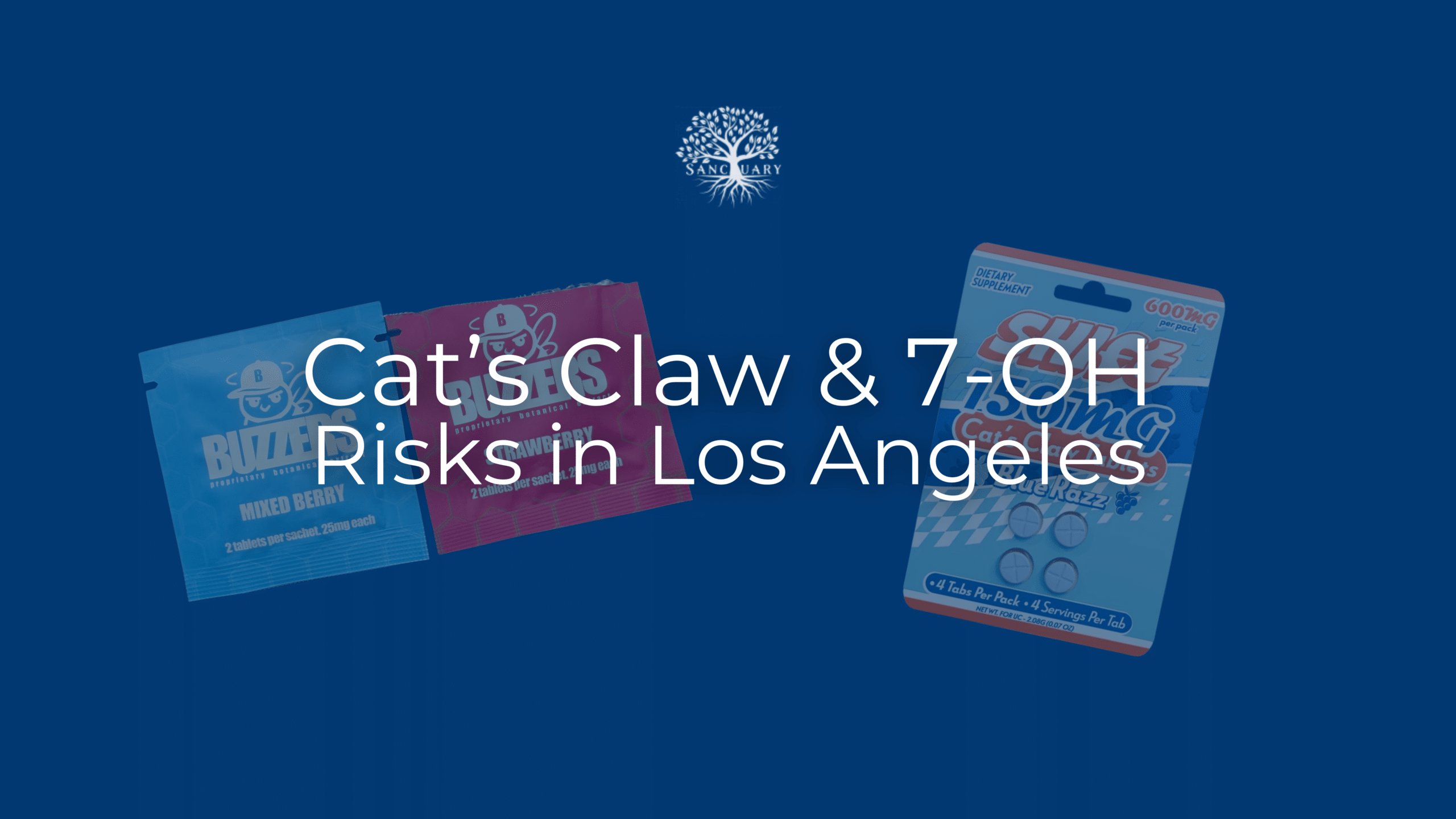
- Poison-control officials have warned that certain products marketed with Cat’s Claw branding may contain undisclosed opioid-active kratom derivatives.
- Some investigated products have reportedly claimed to contain no kratom or 7-OH while potentially containing other opioid-active compounds.
- Los Angeles County has already reported fatal overdoses involving highly concentrated or synthesized kratom-derived products such as 7-OH.
- California has aggressively removed kratom and 7-OH products marketed for consumption from retail stores.
- If a product causes opioid-like intoxication, tolerance, withdrawal or cravings, the effects matter more clinically than the botanical language printed on the package.
- How Sanctuary Helps: Sanctuary Treatment Center provides individualized care in Los Angeles for people struggling with kratom, 7-OH, emerging opioid-like substances, and related dependence, with options that may include medical detox, inpatient treatment, and ongoing recovery support.
Cat’s Claw at a Glance: Traditional Herb vs. Psychoactive Products Using the Name
| Feature | Traditional Cat’s Claw | Psychoactive “Cat’s Claw” Products of Concern |
|---|---|---|
| What it is | An herbal product generally derived from Uncaria tomentosa | Products using Cat’s Claw branding that may contain very different psychoactive compounds |
| Plant source | Uncaria tomentosa, a vine native to Central and South America | May not primarily contain traditional cat’s claw |
| Common market | Herbal and nutritional supplement retailers | Smoke shops, convenience stores, specialty retailers and online sellers |
| Expected effects | Traditionally marketed for general wellness and inflammatory conditions | May produce sedation, euphoria or other opioid-like effects |
| Is it an opioid? | Traditional cat’s claw is not considered an opioid | Certain investigated products may contain opioid-active substances |
| Compounds of concern | Naturally occurring constituents of Uncaria tomentosa | 7-OH, mitragynine pseudoindoxyl, MGM-15, MGM-16 or related compounds may potentially be present in adulterated products |
| Related to kratom? | No | Some compounds identified as concerns are derived from or chemically related to kratom alkaloids |
| Dependence and withdrawal | Not associated with the opioid-type dependence discussed here | Opioid-active ingredients may produce tolerance, cravings, physical dependence and withdrawal |
| Overdose concern | Not associated with the emerging opioid-overdose pattern described in this article | Poison-control officials have warned that adulterated products may cause life-threatening opioid overdose |
| Naloxone | Not relevant to ordinary cat’s claw use | Naloxone should be administered when opioid overdose is suspected while emergency services are contacted |
| Main distinction | Cat’s claw itself is not kratom or 7-OH | A product branded “Cat’s Claw” should not automatically be assumed to contain only the traditional herb |
The concern is not that genuine Uncaria tomentosa suddenly became an opioid. The concern is that botanical terminology can be placed on products whose ingredients and pharmacological effects may be substantially different from the traditional herb.
Why Is Cat’s Claw Suddenly Being Discussed Alongside 7-OH?
For years, the phrase “cat’s claw” primarily referred to an herbal supplement derived from Uncaria tomentosa. That changed when poison-control professionals began warning about products carrying Cat’s Claw branding that appeared in smoke shops and online alongside other psychoactive products.
In July 2026, the Utah Poison Control Center issued an alert after receiving multiple reports of severe overdoses involving products marketed with Cat’s Claw or kava. Investigators suspected some of the products had been adulterated with opioid-active kratom derivatives including 7-hydroxymitragynine, mitragynine pseudoindoxyl, MGM-15 or MGM-16. The agency also warned that labeling could be misleading and that some products might claim to contain no kratom or 7-OH despite concerns about other opioid-active substances.
That distinction is particularly relevant in Los Angeles because the region has already experienced serious consequences associated with concentrated kratom-derived products. Consumers may recognize 7-OH by name now, but new compounds and product branding can emerge faster than public awareness catches up.
Los Angeles Has Already Seen Fatal 7-OH Overdoses
This is not just an emerging drug trend occurring somewhere else in the country. The California Department of Public Health reported that, beginning in April 2025, Los Angeles County identified six fatal overdoses linked to highly concentrated or synthesized kratom-derived products such as 7-OH.
State officials have also warned that these products may be marketed as natural alternatives for pain, anxiety, depression or opioid withdrawal despite lacking approval for those uses.
For people in Tarzana, the San Fernando Valley and the wider Los Angeles area, the concern is therefore not theoretical. Products capable of producing significant opioid effects have already been sold through ordinary retail channels such as smoke shops, gas stations and online retailers.
California has responded with a large enforcement effort. By September 2026, state officials reported thousands of retail inspections and the removal of thousands of prohibited kratom and 7-OH products from store shelves.
Real Cat’s Claw Is Not Kratom or 7-OH
The growing concern around these products should not create the impression that traditional cat’s claw and 7-OH are the same thing. Traditional cat’s claw generally refers to Uncaria tomentosa. Kratom comes from Mitragyna speciosa, a completely different plant native to Southeast Asia.
Kratom contains multiple alkaloids, including mitragynine, while 7-hydroxymitragynine can occur naturally in smaller amounts. The modern public-health concern has increasingly shifted away from traditional plant material toward highly concentrated, isolated, synthesized or chemically modified compounds.
Sanctuary Treatment Center’s guide to kratom and 7-OH addiction treatment in Los Angeles explains this changing market in greater detail. Someone drinking traditional kratom tea may have a dramatically different exposure from someone taking concentrated 7-OH tablets or newer compounds related to kratom chemistry.
The U.S. Food and Drug Administration has described concentrated 7-OH products as potent opioid products and has warned that they have not been proven safe or effective for treating pain, anxiety, opioid withdrawal or other medical conditions. Reported adverse effects have included dependence, withdrawal, anxiety, depression, gastrointestinal problems, insomnia and seizures.
What Are MGM-15, MGM-16 and Mitragynine Pseudoindoxyl?
The terminology surrounding emerging kratom derivatives is becoming increasingly complicated. Three names consumers may encounter are mitragynine pseudoindoxyl, MGM-15 and MGM-16.
These substances are different from ordinary kratom leaf, and their emergence demonstrates why simply looking for the phrase “7-OH” on a package is no longer enough to understand what a product might contain.
Federal regulators have taken action involving 7-OH and related compounds, including mitragynine pseudoindoxyl, MGM-15 and MGM-16, because of concerns about abuse potential and opioid activity.
For consumers, the practical issue is less about memorizing every chemical name and more about understanding that “7-OH free” and “kratom free” are not necessarily the same thing as opioid free when dealing with an unfamiliar or adulterated product.
How Botanical Branding Can Make an Opioid-Like Product Look Safer
Los Angeles has a massive market for supplements, botanicals, nootropics, cannabis products, functional beverages, wellness products and alternative therapies. Most of these products have nothing to do with opioid addiction, but the familiarity of wellness branding can make an unfamiliar psychoactive substance look less concerning than it otherwise might.
Terms such as “natural,” “herbal,” “botanical,” “alkaloid,” “plant based,” “relaxation,” and “wellness” describe how a product is marketed. They do not independently establish its pharmacological effects or addiction potential.
A brightly packaged tablet purchased legally from a storefront may feel very different psychologically from purchasing an illicit opioid. The body, however, responds to the active compounds in the tablet rather than the retail environment in which it was purchased.
This has already become an issue with concentrated kratom products. Someone may begin using kratom because it was presented as an herbal alternative for pain, energy or opioid withdrawal and eventually find that they are taking concentrated products throughout the day simply to avoid becoming sick.
A New Product Name Does Not Necessarily Mean the Dependence Is Gone
People commonly identify substances by brand or product name rather than by active ingredients. That becomes a problem when manufacturers change formulations quickly.
Someone may sincerely believe that they stopped using 7-OH because they stopped purchasing the product they previously associated with 7-OH. If the replacement contains another opioid-active kratom derivative, however, the underlying physical dependence may continue even though the packaging and chemical name changed.
This is why addiction assessment often needs to go beyond asking what substance someone believes they use. Clinicians may need to understand where a product was purchased, how it is packaged, how frequently it is taken, whether the amount has increased, what effects it produces and what happens when the person stops.
Someone who begins waking up in withdrawal, repeatedly dosing throughout the day to feel normal, experiencing increasing cravings or using a new product to suppress withdrawal from an older one may still be dealing with an opioid-like dependence pattern.
Signs a Cat’s Claw-Branded Product May Not Be Traditional Cat’s Claw
A person may have reason to question an unfamiliar Cat’s Claw product when its effects resemble those of an opioid more than those expected from a conventional herbal supplement.
Potential warning signs can include:
- Pronounced sedation or “nodding”
- Euphoria followed by repeated cravings
- Rapidly increasing tolerance
- Needing multiple doses throughout the day
- Using the product specifically to prevent withdrawal
- Feeling sick after missing a dose
- Body aches, sweating or chills between doses
- Restlessness and anxiety when trying to stop
- Significant insomnia during withdrawal
- Gastrointestinal symptoms after discontinuation
- Returning to the product repeatedly despite intending to quit
These symptoms cannot identify the exact chemical in a product, but they can indicate that the person’s use deserves further evaluation.
Can Fake or Adulterated Cat’s Claw Cause Withdrawal?
Traditional Uncaria tomentosa should not be confused with products that contain opioid-active kratom derivatives. When substances such as 7-OH or related compounds are involved, physical dependence and withdrawal can become significant concerns.
Withdrawal from concentrated kratom-derived products may involve anxiety, restlessness, sweating, insomnia, body aches, cravings, irritability and gastrointestinal problems. The intensity can vary considerably depending on the specific substance, concentration, frequency of use, length of use, other substances being taken and the individual’s history of opioid dependence.
This variability is one reason a person should not assume that a withdrawal protocol discussed online for ordinary kratom will necessarily apply to a concentrated 7-OH tablet or an unfamiliar smoke-shop product.
When significant physical dependence has developed, medical supervision may be appropriate. Sanctuary’s Los Angeles medical detox program is one option for people who need structured support while withdrawing from drugs or alcohol.
What Happens After Detox?
Detox addresses physical stabilization, but it does not necessarily address the reasons substance use became repetitive or difficult to control.
Some people begin using kratom-related products because they previously struggled with opioids. Others may use them for pain, anxiety, sleep, energy or mood. Over time, use can become increasingly focused on preventing withdrawal rather than achieving the effect that originally led the person to try the substance.
People who need continued structure after detox may transition into inpatient rehab in Los Angeles or another appropriate level of care. Treatment can then focus on cravings, relapse triggers, co-occurring mental health concerns, behavioral patterns and long-term recovery planning.
What to Do During a Suspected Overdose
An unfamiliar botanical product should be treated seriously when someone becomes unresponsive or stops breathing normally.
The Utah Poison Control Center has recommended calling 911 and administering naloxone when someone cannot be awakened or is not breathing after consuming one of the adulterated Cat’s Claw or kava products under investigation. California officials have similarly advised people who may use 7-OH to carry naloxone because naloxone can reverse an opioid overdose involving the compound.
Possible opioid-overdose warning signs can include:
- Very slow, irregular or stopped breathing
- Inability to wake the person
- Blue, gray or pale lips or skin
- Pinpoint pupils
- Limpness
- Choking, snoring or gurgling sounds
When possible, keep the package and provide it to emergency medical personnel. An unfamiliar brand name may initially mean very little to responders, while the ingredient list, manufacturer information or remaining tablets may provide useful context.
Why This Matters Specifically in Los Angeles
Los Angeles has frequently been an early market for emerging wellness products, supplements and psychoactive substances. At the same time, Los Angeles County is where California identified the six fatal overdoses that helped drive heightened concern about concentrated and synthesized kratom-derived products.
The result is an environment where public awareness can lag behind product development. By the time consumers learn what 7-OH is, products involving mitragynine pseudoindoxyl or MGM compounds may already be appearing. By the time one product name becomes associated with risk, another botanical-sounding name may emerge.
People do not need to become experts in synthetic opioid chemistry to recognize when something is wrong. Escalating tolerance, withdrawal, cravings, compulsive use, sedation and an inability to stop are meaningful warning signs regardless of whether the substance came from a pharmacy bottle, a street source, a smoke shop or a package labeled as an herbal product.
Cat’s Claw, Kratom and 7-OH Treatment in Los Angeles
Sanctuary Treatment Center in Tarzana provides addiction treatment for adults throughout Los Angeles and Southern California, including people struggling with kratom, concentrated extracts, 7-OH and newer kratom-derived compounds.
Sanctuary’s kratom and 7-OH treatment program can help evaluate the products being used, frequency of dosing, duration of use, previous withdrawal experiences, opioid history, other substance use and co-occurring mental health concerns. Depending on clinical needs, care may include medical detox, inpatient addiction treatment and continued recovery support.
Someone does not need to know whether a Cat’s Claw-branded product contains 7-OH, MGM-15, mitragynine pseudoindoxyl or another unidentified compound before asking for help. If the product has become difficult to stop, causes withdrawal, produces opioid-like effects or has begun controlling daily life, a clinical assessment can help determine an appropriate next step.
Call Sanctuary Treatment Center at (888) 584-4314 to speak confidentially with admissions about Cat’s Claw, kratom, 7-OH or other substance-use concerns in Los Angeles.
Sources
California Department of Public Health. (2025, October 24). Foods, dietary supplements and medical drugs containing kratom and 7-OH are dangerous and illegal to sell or manufacture. California Health & Human Services Agency. https://www.cdph.ca.gov/Programs/OPA/Pages/NR25-016.aspx
California Department of Public Health. (2026, January 16). CDPH warns retailers and public about the dangers of kratom-derived products and 7-OH. California Health & Human Services Agency. https://www.cdph.ca.gov/Programs/OPA/Pages/NR26-005.aspx
Drug Enforcement Administration. (2026, July 1). DEA to temporarily schedule 7-OH and related substances to protect public safety. U.S. Department of Justice. https://www.dea.gov/press-releases/2026/07/01/dea-temporarily-schedule-7-oh-and-related-substances-protect-public
Office of Governor Gavin Newsom. (2026, September 2). Governor Newsom announces nearly 15,300 illegal hemp, kratom and 7-OH products removed from California store shelves. State of California. https://www.gov.ca.gov/2026/09/02/governor-newsom-announces-nearly-15300-illegal-hemp-kratom-and-7-oh-products-removed-from-california-store-shelves/
U.S. Food and Drug Administration. (2025). Products containing 7-OH can cause serious harm. U.S. Department of Health and Human Services. https://www.fda.gov/consumers/consumer-updates/products-containing-7-oh-can-cause-serious-harm
Utah Poison Control Center. (2026, July 22). Adulterated Cat’s Claw and Kava products may cause opioid overdose. University of Utah Health. https://poisoncontrol.utah.edu/news/2026/07/adulterated-cats-claw-and-kava-products-may-cause-opioid-overdose