

Written By
John Ingham,
Medical & Behavioral Health Content Writer
Medically and Clinically Reviewed per our editorial standards
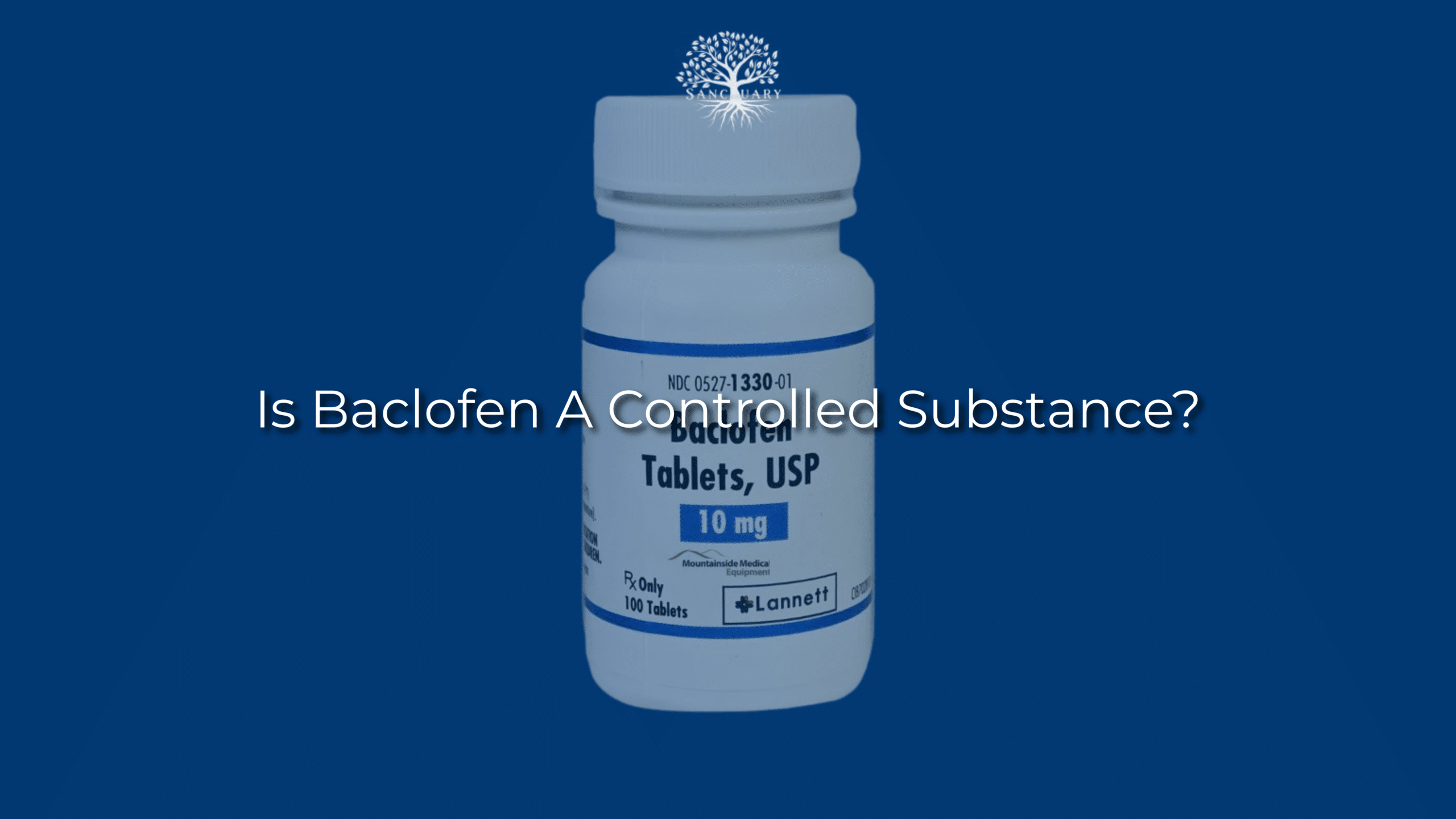
Baclofen is not classified as a controlled substance under federal U.S. law. That means it is not scheduled like opioids, benzodiazepines, stimulants, or other drugs regulated under the Controlled Substances Act. However, baclofen is still a prescription medication, and it can still be dangerous when misused, taken in high doses, mixed with other substances, or stopped suddenly after regular use.
Baclofen is commonly prescribed as a muscle relaxant and antispastic medication. It is often used to help reduce muscle stiffness, spasms, cramping, and tightness related to conditions such as multiple sclerosis, spinal cord injury, or other neurological disorders.
At Sanctuary Treatment Center, we understand that prescription medications can become complicated for people with a history of substance use, anxiety, chronic pain, or co-occurring mental health concerns. Baclofen may not be federally controlled, but that does not mean it is risk-free.
What Is Baclofen?
Baclofen is a medication that acts on the central nervous system to reduce muscle spasticity. It is sometimes described as a muscle relaxer, though its effects are different from many commonly abused sedatives or pain medications.
Doctors may prescribe baclofen for:
- Muscle spasms
- Muscle stiffness
- Spasticity from multiple sclerosis
- Spinal cord injuries
- Certain neurological conditions
- Off-label uses in select clinical situations
Baclofen can be prescribed as an oral tablet, oral liquid, oral granules, or, in more severe cases, delivered through an intrathecal pump directly into the spinal fluid.
Is Baclofen a Narcotic?
No. Baclofen is not a narcotic.
The term “narcotic” is often used to refer to opioids such as oxycodone, hydrocodone, morphine, heroin, or fentanyl. Baclofen is not an opioid, does not treat pain the same way opioids do, and is not classified as a narcotic drug.
However, baclofen can still cause central nervous system effects, including sedation, dizziness, confusion, weakness, and impaired coordination. These effects may become more dangerous when baclofen is combined with alcohol, opioids, benzodiazepines, sleep medications, or other sedating substances.
Why Isn’t Baclofen Controlled?
The DEA classifies controlled substances into Schedules I through V based on factors such as accepted medical use, abuse potential, and risk of physical or psychological dependence. Schedule II drugs, for example, include medications with a high potential for abuse and dependence, such as oxycodone, fentanyl, Adderall, and Ritalin.
Baclofen is not listed as a federally scheduled controlled substance. This means it is regulated as a prescription medication, but it does not fall into the same legal category as controlled substances like opioids, benzodiazepines, or stimulants.
That distinction matters legally, but it does not erase the medical risks. Prescription-only status still means baclofen should be taken only under the direction of a licensed medical provider.
Can Baclofen Be Abused?
Yes, baclofen can be misused, even though it is not a controlled substance.
Some people may take baclofen in higher doses than prescribed, use it more often than directed, combine it with other substances, or take it without a prescription. Misuse may occur because the medication can cause relaxation, sedation, or a calming effect in some people.
Possible signs of baclofen misuse may include:
- Taking more than prescribed
- Running out of medication early
- Using baclofen with alcohol or other drugs
- Feeling unable to function without it
- Seeking prescriptions from multiple providers
- Using baclofen to self-manage anxiety, sleep, withdrawal, or emotional distress
- Confusion, excessive sleepiness, or appearing intoxicated
Baclofen misuse can be especially risky for people with a history of substance use disorder, polysubstance use, or untreated mental health symptoms.
Can You Become Dependent on Baclofen?
Yes. Baclofen can cause physical dependence, especially when taken regularly over time.
Physical dependence means the body has adapted to the medication. This is not the same thing as addiction, but it can still create serious health risks. A person may be physically dependent on baclofen even when taking it exactly as prescribed.
Dependence becomes especially dangerous when someone stops baclofen suddenly. FDA labeling warns that abrupt baclofen withdrawal has been associated with serious reactions, including hallucinations and seizures.
Baclofen Withdrawal Symptoms
Baclofen should not be stopped suddenly without medical guidance. Withdrawal can range from uncomfortable to medically serious.
Possible baclofen withdrawal symptoms may include:
- Anxiety
- Agitation
- Insomnia
- Confusion
- Muscle stiffness or rebound spasticity
- Tremors
- Hallucinations
- Fever
- Seizures
- Changes in mental status
Withdrawal from intrathecal baclofen pumps can be particularly dangerous and may become a medical emergency. Baclofen toxicity and withdrawal can both affect the nervous system, but withdrawal is more commonly associated with increased spasticity and hyperreflexia, while toxicity may involve central nervous system depression, confusion, lethargy, or coma.
Anyone experiencing severe confusion, hallucinations, seizure, high fever, or extreme muscle rigidity after stopping baclofen should seek emergency medical care.
Baclofen Side Effects
Even when taken as prescribed, baclofen can cause side effects. Common or concerning effects may include:
- Drowsiness
- Dizziness
- Weakness
- Fatigue
- Nausea
- Headache
- Confusion
- Low blood pressure
- Impaired coordination
- Breathing problems in severe cases or mixed-substance use
Because baclofen can cause sedation, people should be cautious when driving, operating machinery, or combining it with other medications that slow the central nervous system.
Baclofen and Alcohol
Mixing baclofen and alcohol can be dangerous.
Both substances can depress the central nervous system. When taken together, they may increase the risk of:
- Extreme drowsiness
- Blackouts
- Poor coordination
- Falls or injuries
- Slowed breathing
- Confusion
- Risky decision-making
- Overdose-like symptoms
For people in recovery, using baclofen with alcohol or other sedatives may also increase the risk of relapse or create a pattern of medication misuse.
Is Baclofen Addictive?
Baclofen is not considered addictive in the same way as opioids, benzodiazepines, or stimulants, but addiction-like patterns can still occur.
A person may need help if they are using baclofen compulsively, taking it to change how they feel emotionally, combining it with other substances, or continuing to misuse it despite negative consequences.
Possible warning signs include:
- Using baclofen to get high or feel numb
- Taking it with alcohol, opioids, or benzodiazepines
- Feeling cravings for the medication
- Lying about use
- Doctor shopping
- Withdrawal symptoms when stopping
- Failed attempts to cut back
- Neglecting work, family, or responsibilities because of use
Even if baclofen itself is not federally controlled, compulsive use should be taken seriously.
Baclofen vs. Controlled Substances
| Medication | Controlled Substance? | Common Use | Main Concern |
|---|---|---|---|
| Baclofen | No | Muscle spasticity | Sedation, dependence, withdrawal |
| Oxycodone | Yes | Pain | Addiction, overdose, dependence |
| Xanax | Yes | Anxiety/panic | Dependence, withdrawal, sedation |
| Adderall | Yes | ADHD/narcolepsy | Misuse, dependence, stimulant effects |
| Soma | Yes | Muscle pain | Sedation, misuse, dependence |
Baclofen’s non-controlled status does not mean it is automatically safer for everyone. The risk depends on the person, dose, medical history, other medications, and whether it is being used as prescribed.
When Baclofen Use Becomes a Problem
Baclofen may become a concern when it is used outside medical direction or becomes part of a larger pattern of substance misuse.
You may need professional support if:
- You cannot stop taking baclofen without withdrawal symptoms
- You are mixing baclofen with alcohol or other drugs
- You are taking higher doses than prescribed
- You feel dependent on baclofen to cope emotionally
- You have a history of addiction and feel concerned about your use
- Loved ones have noticed changes in your behavior
- You are using baclofen alongside opioids, benzodiazepines, or sleep medications
These situations do not mean someone has failed. They mean the medication needs to be addressed safely and clinically.
Treatment for Prescription Medication Misuse
At Sanctuary Treatment Center, we help people address prescription medication misuse alongside the deeper issues that often drive it, including trauma, anxiety, depression, chronic stress, and co-occurring substance use.
Treatment may include:
- Clinical assessment
- Medical support and referral when needed
- Individual therapy
- Group therapy
- Relapse prevention planning
- Dual diagnosis treatment
- Medication education
- Support for polysubstance use
- Family support and case management
If baclofen is being misused, or if someone is afraid to stop because of withdrawal symptoms, the safest next step is to speak with a medical professional. Detox or medically supervised support may be necessary depending on the dose, duration of use, and other substances involved.
Get Help for Prescription Drug Misuse in Los Angeles
Baclofen is not a controlled substance, but it is still a medication that requires caution. Misuse, dependence, withdrawal, and dangerous interactions can happen, especially when baclofen is mixed with alcohol or other drugs.
Sanctuary Treatment Center provides compassionate support for people struggling with prescription drug misuse, substance use disorders, and co-occurring mental health conditions. If you or someone you love is concerned about baclofen use or any other medication, help is available.
Contact Sanctuary Treatment Center today to speak with our admissions team and learn more about treatment options in Los Angeles.
Frequently Asked Questions
Is baclofen a controlled substance?
No. Baclofen is not classified as a controlled substance under federal U.S. law. It is a prescription medication, but it is not scheduled by the DEA like opioids, benzodiazepines, or stimulants.
Do you need a prescription for baclofen?
Yes. Baclofen requires a prescription from a licensed medical provider. Even though it is not a controlled substance, it should only be used under medical supervision.
Is baclofen a narcotic?
No. Baclofen is not a narcotic and is not an opioid. It is primarily used as a muscle relaxant and antispastic medication.
Can baclofen get you high?
Some people misuse baclofen for its sedating or calming effects, especially at higher doses or when combined with other substances. This can be dangerous and may increase the risk of overdose-like symptoms, injury, or dependence.
Can baclofen cause withdrawal?
Yes. Baclofen withdrawal can happen, especially after regular use. Abrupt withdrawal has been associated with serious symptoms such as hallucinations and seizures. Baclofen should not be stopped suddenly without medical guidance.
Is baclofen addictive?
Baclofen is not considered highly addictive in the same category as opioids or benzodiazepines, but misuse and dependence can occur. If someone feels unable to control their baclofen use, professional help may be needed.
What happens if you mix baclofen and alcohol?
Mixing baclofen and alcohol can increase sedation, confusion, poor coordination, slowed breathing, and risk of injury. People taking baclofen should ask their prescriber whether alcohol is safe for them.
Can baclofen be used for addiction treatment?
Baclofen has been studied or used off-label in some substance use-related contexts, but it is not a universal addiction treatment and should not be used without medical supervision. People should not self-medicate with baclofen for alcohol, opioid, or sedative withdrawal.
What should I do if I want to stop taking baclofen?
Speak with your prescribing provider before stopping. A medical professional may recommend a gradual taper to reduce withdrawal risk.
Sources
Drug Enforcement Administration. (n.d.). Drug scheduling. U.S. Drug Enforcement Administration. https://www.dea.gov/drug-information/drug-scheduling
Drug Enforcement Administration. (n.d.). The Controlled Substances Act. U.S. Drug Enforcement Administration. https://www.dea.gov/drug-information/csa
Drug Enforcement Administration Diversion Control Division. (2026). Controlled substances: Alphabetical order. U.S. Department of Justice. https://www.deadiversion.usdoj.gov/schedules/orangebook/c_cs_alpha.pdf
Drug Enforcement Administration Diversion Control Division. (n.d.). Controlled substance schedules. U.S. Department of Justice. https://www.deadiversion.usdoj.gov/schedules/schedules.html
DailyMed. (n.d.). Baclofen tablet prescribing information. National Library of Medicine. https://dailymed.nlm.nih.gov/dailymed/drugInfo.cfm?setid=346af8fe-3816-49de-bfd3-5a7425e728f9
DailyMed. (n.d.). Baclofen oral solution prescribing information. National Library of Medicine. https://dailymed.nlm.nih.gov/dailymed/drugInfo.cfm?setid=890df151-f4eb-4244-97c4-f1f10912e753
Dease, N. M., Kershner, E. K., & Wills, B. K. (2023). Baclofen toxicity. StatPearls. National Center for Biotechnology Information. https://www.ncbi.nlm.nih.gov/books/NBK580550/
Ghanavatian, S., & Derian, A. (2024). Baclofen. StatPearls. National Center for Biotechnology Information. https://www.ncbi.nlm.nih.gov/books/NBK526037/